
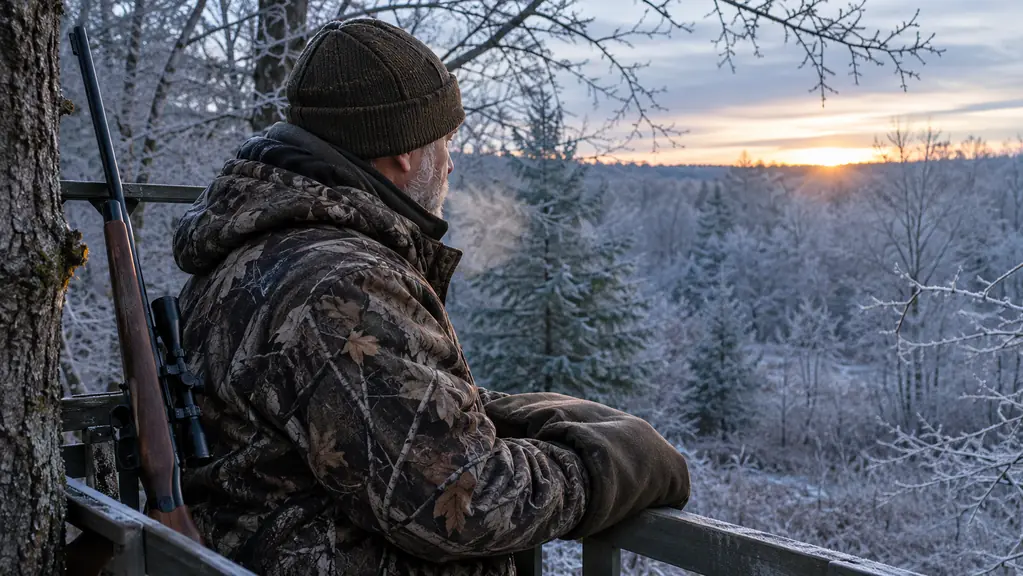
Cold hands have ended more hunts than any buck I ever spooked. You know the drill. You climb in before daylight, the thermometer is sitting right on freezing, and by the time the woods turn gray your fingers are too stiff to work a zipper, much less a trigger. I hunted that way for years. Disposable warmer packets stuffed in my coat pockets, thin gloves I could barely feel through, and a whole lot of time spent blowing on my knuckles and hoping the sun would climb. It worked about as well as you would expect, which is to say it did not work. By the time I was warm enough to shoot straight, the deer were already back in the thick stuff.
In the summer of 2025 I added the Hunter Safety System Muff-Pak to my kit, and it changed the way I sit in a stand in January. This is the straight version of what I learned over a full season with it. No sales pitch. Just the five steps I run through on every cold hunt now, plus the things that surprised me and the one thing I would tell a younger version of myself if he was still stuffing hand warmers in his pockets.
Warm Hands Without the Bulk
The Hunter Safety System Muff-Pak is a fleece-lined muff you wear crossbody, with front and back pockets, that keeps your hands inside and your trigger finger ready. I ran mine through a full season of cold-weather sits and it never let me down. Check the current price and see if it earns a spot in your truck.
Amazon Check Today's Price on Amazon →Why a Hand Muff Beats Gloves in a Stand
Gloves have their place. I still wear a thin pair on the coldest mornings. But gloves fail you in a deer stand for one simple reason: the moment you need to feel your trigger or your bow string, you have to take them off. Then your hands are cold again, and you are back to square one. A muff works the opposite way. Your hands stay inside it, warm, right up to the second you need them. They come out, you shoot, and they go right back in. No taking gloves off, no putting them back on, no cold fingers at the wrong moment.
The other thing a muff does that gloves cannot is give your hands a place to live for four hours. In a stand, you are not moving much. Your hands just sit there. If they are in your coat pockets, you are hunched over and your shoulders tighten. If they are in a muff on the rail in front of you, you sit natural and you stay alert. That matters more than you think when the buck finally steps out. I have been in both positions and I know which one gets the shot off clean.
Now, I am not going to tell you a muff replaces a good coat or a pair of heavy gloves on the walk in. It does not. It is a tool for the stand, and it is the best tool I have found for that one job. That is why the Hunter Safety System Muff-Pak earned a permanent spot in my truck.
Step 1: Set the Strap Length Before You Leave the Truck
The Muff-Pak comes in one size, and it weighs 11.2 ounces, light enough that you will forget it is on you. The included extender strap is what makes it work. You can wear it crossbody or adjust the length to hang wherever you need it. Do that adjusting at the truck, in the daylight, not in the dark at the base of the tree. I cannot tell you how many times I have watched someone fight with a piece of gear they never set up before they needed it. Ten minutes of daylight saves you an hour of frustration.
Here is what I learned the first time out. If the muff hangs too low, you will be reaching for it all morning and your coat will ride up over it. If it hangs too high, it rides up under your coat and your hands never find it. I set mine so the opening sits right at my belt line when I am standing. When I sit down in the stand, that puts it exactly where my hands naturally fall. The adjustment takes twenty seconds and it is the difference between a muff you use and a muff you carry.
One more thing about the strap. It is an extender, which means you can wear the muff crossbody and still move your arms freely. That matters on the walk in and it matters in the stand. You are not strapped into it like a piece of armor. It just hangs there, out of the way, until you need it.
Step 2: Put It On Before You Climb
Wear the muff into the stand. Do not pack it. With the strap adjusted, it hangs flat against your chest and stays out of the way while you climb. Your hands stay free for the ladder, which matters more than warmth. I have climbed enough cold, dark ladders to know that the guy who gets to the top safely is the guy who is not carrying anything in his hands. The muff rides along like a second layer, and you will forget it is there until you sit down and reach for it.
And before you climb anything, put on your safety harness and hook in. I do not climb a ladder stand without one, and I will not pretend otherwise. The muff is no good to you if you come off the steps. Get hooked up first, then worry about your hands. That is not a lecture, it is the difference between walking out of the woods and being carried out. I spent thirty years as a lineman and I have seen what a fall does to a man. The five extra seconds it takes to clip in are the best five seconds of the hunt.
Once you are up and clipped in, the muff is already where it belongs. You did not have to dig it out of a pack or strap it on one-handed in the dark. You just settle in, pull your hands inside, and get ready for daylight. That is the whole point of doing it at the truck and wearing it up the ladder.
Step 3: Position It Where Your Hands Actually Rest
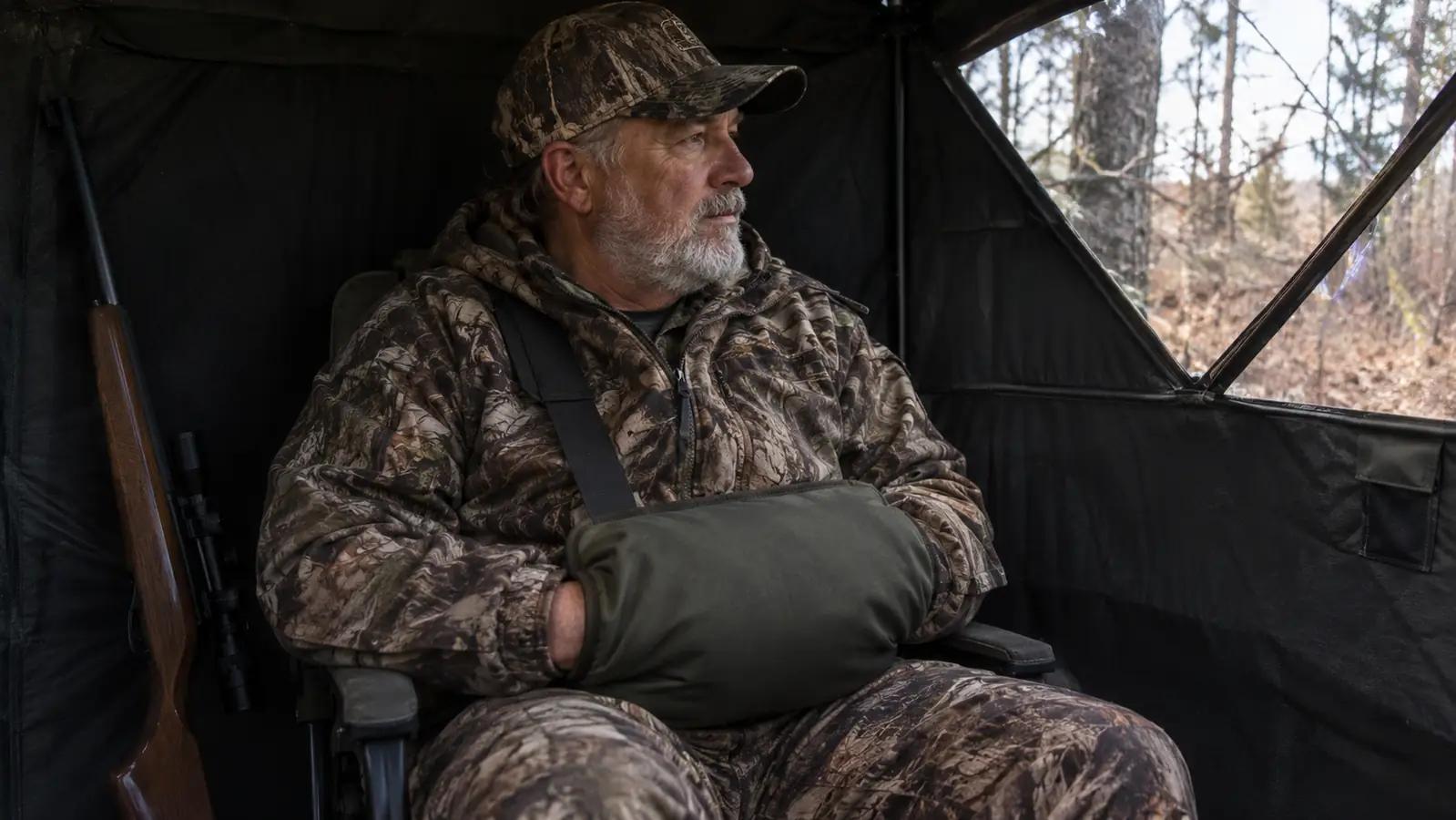
In a ladder stand, I lay the muff on the rail in front of me, or across my lap if the rail is too low. In a ground blind, I rest it on my knees. The goal is simple: your hands should be able to slide into it without you looking down or shifting around. If you have to reach for it, you will not use it. You will just sit there with your hands in your pockets, cold, the same as always, and wonder why you spent the money.
This is the part most people get wrong. They hang the muff somewhere convenient and then sit in a position that does not line up with it. Then they spend the whole sit with one hand in and one hand out, or none in at all. Sit first. Settle into your normal shooting position. Then move the muff to meet your hands. It takes ten seconds and it turns a useless piece of gear into the best thing in your stand. I do it the same way every hunt now, and I stopped fighting with the thing after the first week.
When you are settled, your hands should be inside the muff and your elbows should be relaxed. That is the position you can hold for hours. I have sat through some long January mornings this way, and the difference between this and the old coat-pocket method is night and day. Your shoulders stay loose, your head stays up, and you are ready the second something steps out.
Step 4: Keep Your Hands Inside Until the Shot
The whole point of a muff is that your hands stay warm right up to the moment you need them. With the Muff-Pak, my hands come out of the fleece, I make the shot, and they go right back in. There is no fumbling with a glove, no shoving a hand into a coat pocket, no cold fingers at the worst possible time. It is the closest thing to having your hands in your pockets and still being able to shoot that I have ever used. That sounds like a small thing until you have watched a buck walk because you were not ready.
The front and back pockets are the part I did not expect to use as much as I do. The back pocket holds a spare warmer packet or a pair of gloves. The front pocket is where I keep hand warmers on the coldest mornings. You can run the whole sit without opening your coat, which means you are not making noise and you are not letting your body heat out. That is a bigger deal than it sounds. The less you move in a stand, the more deer you see, and the pockets mean you do not have to move at all.
When the moment comes, the muff does not get in the way. It hangs where it hung all morning. You just bring your hands out and shoot. For bowhunters, the same idea applies. The muff sits low enough that it does not catch your bow arm or your string. I have never once had it interfere with a shot, and I have used it all season.
Step 5: Keep It Dry and It Will Keep You Warm
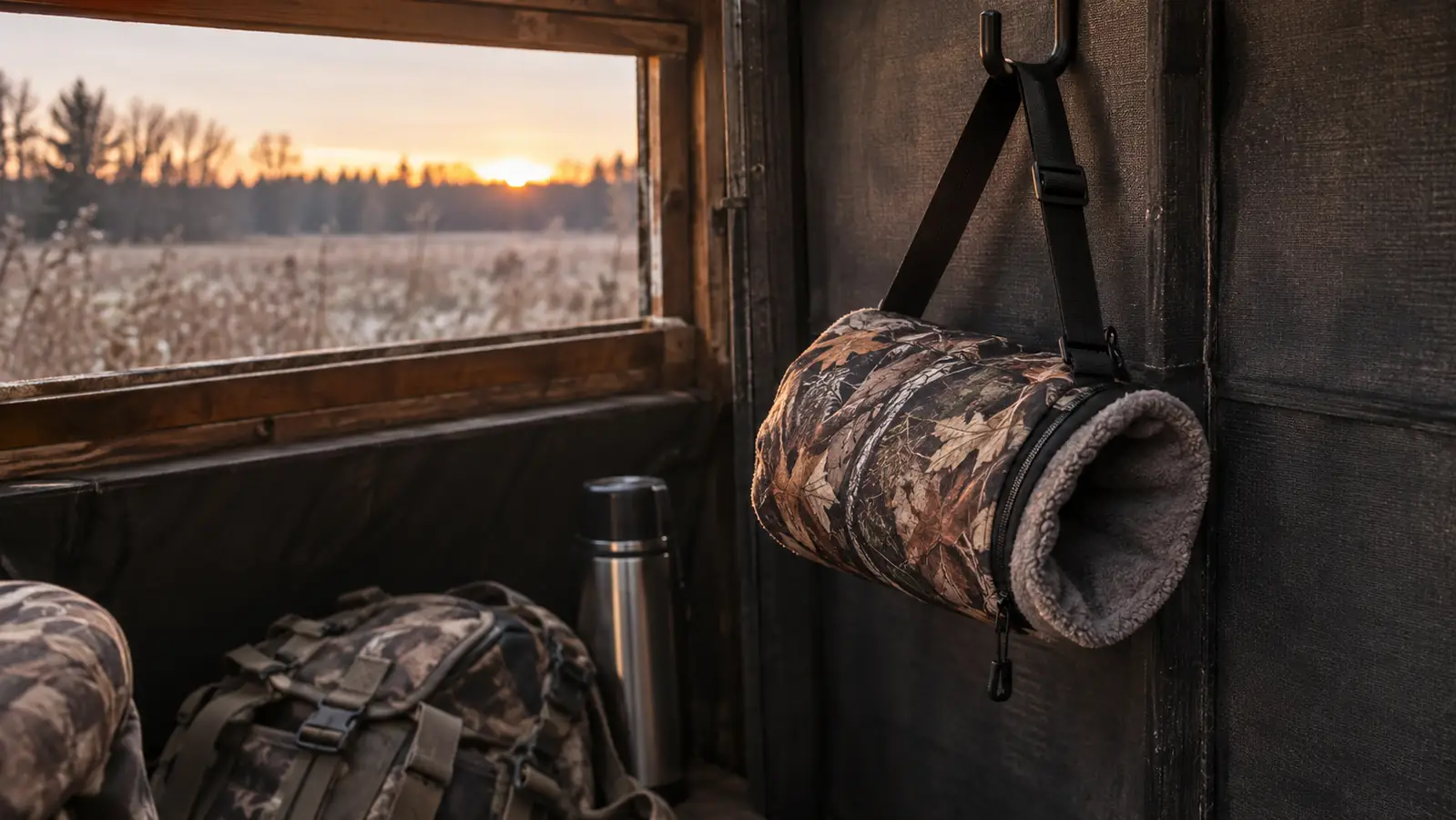
The polar fleece lining is what does the work. It traps the heat your hands give off and holds it right where you need it. But fleece that gets wet stops trapping heat. I keep the muff inside my coat on wet mornings, or I hang it on a hook in the blind until I am settled. A little care at the start of the sit means warm hands at the end of it. The same goes for the walk in. If it is raining, I tuck the muff under my coat until I am in the stand.
One more thing I learned the hard way. Do not overstuff the muff. It is tempting to load it with every warmer packet in your pack, but a muff that is packed full does not let your hands move, and you need to be able to move them. Two packets, one in each pocket, is plenty for me. Your hands generate their own heat, and the fleece holds it. The packets are backup, not the main event.
At the end of the hunt, I shake it out, let it air, and hang it in the truck. It has been through a full season of cold mornings and it is still doing the job. The fleece has not matted down, the strap has not stretched, and the pockets still hold what I put in them. That is what I mean when I say gear earns its spot in the truck. It does not get babied, it gets used, and it holds up.
What Else Helps
The muff does the heavy lifting, but it is not the whole answer. I still wear a thin pair of gloves on the coldest mornings, mostly to keep the wind off my knuckles when I take my hands out. I keep my core warm, because cold hands are usually a sign of a cold body. And I still carry disposable warmer packets, I just keep them in the muff instead of in my coat pockets. None of it is fancy. It is just a system that works together instead of against each other.
The whole thing is not complicated. It just means thinking about the whole system instead of one piece of it. The muff is the center of that system for me now. It earned that spot the way all gear earns it with me: by working every single time I reached for it. If you hunt from a stand when the temperature drops, that is what you are really paying for.
I will add one more thing. The walk in and the walk out are the coldest parts of the hunt, because you are not sitting still. The muff is not built for the walk. I keep my hands in my coat pockets on the way in and let the muff do its job once I am in the stand. Use the right tool for the right part of the hunt and everything works better.
On a 28-degree January morning, my hands stayed warm enough inside the muff that I never once thought about climbing down before shooting light was gone.
A Full Season of Warm Hands
A full season of cold-weather hunts with the Hunter Safety System Muff-Pak and it is still the first thing I grab when the temperature drops. If you hunt from a stand, this is the honest recommendation: it works. Check the current price on Amazon and see if it earns a spot in your truck.
Amazon Check Today's Price on Amazon →