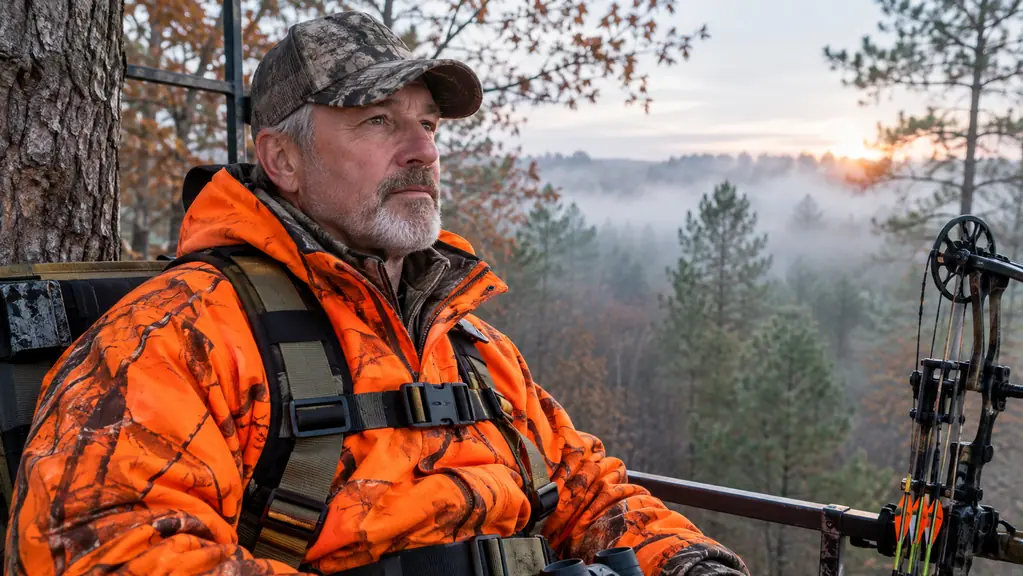
I've climbed the same ladder stand on our family lease for the better part of a decade, and for most of that time I did it with nothing but an old waist belt around the tree. It was the kind of setup I should never have trusted, and I knew it. Near the end of the 2024 season I came off the top of that stand with one foot on the ladder and one foot on nothing, and I caught myself with one arm and a whole lot of luck. I told Cody about it that night, and he said what I already knew: if I was going to keep hunting the way we hunt, I was going to do it in a real harness.
So in late summer of 2025, before last deer season, I bought the Summit Treestands Pro Safety Harness. I've worn it every sit since, through the 2025-26 deer season and into the spring turkey woods. A full season in the ladder stand is enough time to know what a piece of safety gear is made of. Here's what I found.
The Quick Verdict
The harness that finally got me out of the old waist belt. Comfortable enough to wear all sit, simple enough to put on in the dark, and it held me on every climb of the season.
Amazon Check Today's Price →If you climb a ladder stand without a full-body harness, this is the one to start with.
The Summit Pro is the harness I wore every sit last season. It's rated for the work, it fits over heavy winter layers, and it's been on my back for every climb since. Check today's price on Amazon.
Amazon Check Today's Price on Amazon →How I've Used It
The Summit Pro lives in the truck from September to April. On hunt mornings I put it on at the tailgate, before I walk in, and I leave it on until I'm back at the truck. That habit matters more than any piece of gear, because a harness on the hook at home can't do a thing for you. I made the mistake of leaving the old waist belt behind once, years ago, and I spent the whole sit feeling like I'd forgotten my boots. I don't do that with this one.
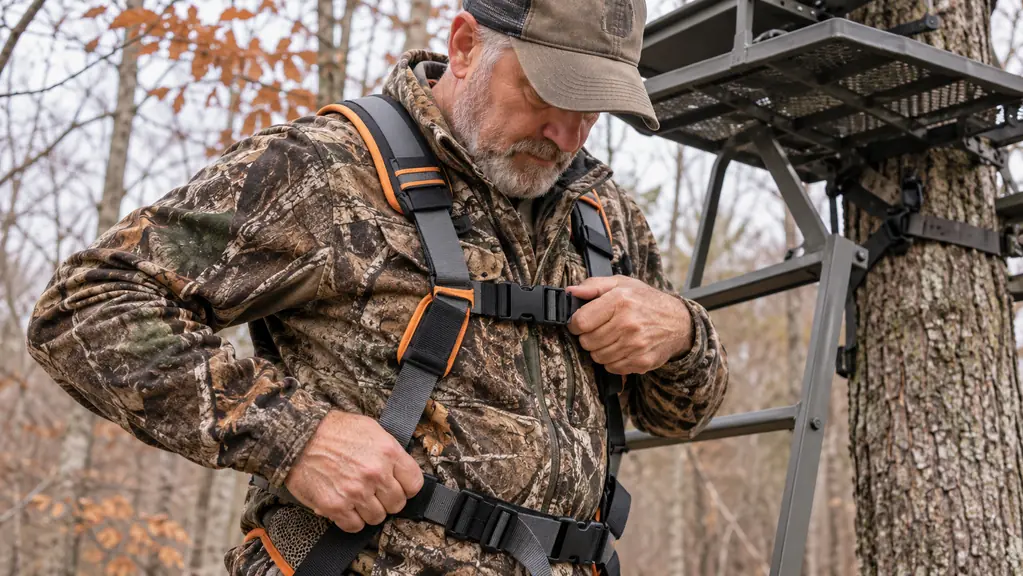
Setup is simple enough to do in the dark. The torso strap goes around my chest, the padded shoulder straps go on like a backpack, and the waist strap cinches where it needs to. I'm a big man, and the Large fits me with room to spare. Summit Treestands lists the Large for a 35- to 46-inch waist, and that matches what I feel when I wear it. The whole thing weighs 5.1 pounds, which sounds like a lot until it's on your back instead of in your hand. Once it's on, I forget the weight.
I use it only in the ladder stand. That's where I needed it, and that's where it earns its spot in the truck. The MOLLE attachment system gave me a place to hang a small pouch for hand warmers and a grunt call, which sounds like a small thing until you've spent a January morning with your hands in your pockets. Cody runs his own gear, so the Summit is mine alone. After a full season it still looks like it did the day I unpacked it.
Why I Finally Got Out of the Waist Belt
I spent 30 years as a lineman, and the first thing they teach you about working at height is that safety gear only works if you use it every single time. The second thing they teach you is that the cheap stuff fails at the worst possible moment. I knew both of those things, and I still climbed with a waist belt that would have done nothing if I'd actually fallen. The near-slip in 2024 was the push I needed. I'd been lucky, and I knew better than to push that luck a second time. Cody said it plain: 'You're not hurt, and that's the only reason you get to buy a better one.'
The difference between the old belt and the Summit is the difference between holding on and being held. The waist belt just sat around my middle. If I'd gone over the edge, it would have flipped me upside down and left me hanging against the tree, and that's on a good day. The full-body harness spreads the load across my shoulders, chest, and waist, and it keeps me upright. I didn't buy it because I planned to fall. I bought it because the one time I almost did, I had nothing but an arm and a lucky grab.
I'll say this plainly: a harness is not a talisman. It doesn't keep you from slipping, it keeps the slip from killing you. The Summit does that part well. But it only does it if you clip in before you climb and stay clipped until you're down. I clip in at the base of the ladder, before my boots leave the ground, and I don't unclip until I'm standing on dirt again. That's the whole system, and it worked every time this season.
A Full Season in the Ladder Stand
Comfort is where the Summit surprised me. I expected a safety harness to feel like a piece of equipment, the way my climbing belt did on the job. Instead, the padded shoulder straps and the torso strap spread the weight out well enough that I stopped noticing them by the time I was settled in the stand. I had it on for four and five hours at a stretch in November and December, and I never once felt the urge to loosen it. That's the highest compliment I can pay any piece of hunting gear. In January, wearing it over a heavy coat, I barely felt it at all.
The test I trust most is the one I didn't plan. One December morning, coming down in the dark, I missed a step on the ladder. My foot went through the rung instead of onto it, and for a second I was hanging off the side of the stand with the harness doing exactly what it was supposed to do. I got my feet back under me, finished the climb down, and sat in the truck for a minute before I started the engine. I don't know what the old waist belt would have done in that moment. I'm glad I didn't have to find out.
Spring turkey season is a different test. You're not sitting still for hours, you're moving, calling, and sometimes you're in the stand for a short sit before you climb down and move to another spot. The Summit worked there too. The shoulder straps stayed put when I shifted, the waist strap didn't dig in when I leaned, and the MOLLE pouch kept my diaphragm call and a pair of hand warmers where I could reach them without moving my eyes off the woods. I took a good buck and a doe last season, and both mornings I was in the Summit from first light to the walk out.
I wore it on every climb of the deer season and every sit of turkey season, and the only time I really thought about it was the morning I missed a step. It did its job. That's the whole review.
What I'd Change (and What I Wouldn't)
Nothing is perfect, and this harness has a few things I'd mention to a friend before he bought one. First, at 5.1 pounds it is not the lightest thing you'll carry into the woods. It's not heavy enough to complain about, but it's not nothing, and if you're used to carrying a harness in your hand, you'll notice it. Second, the care instructions are specific: hand wash only with a mild soap solution and air dry. That's not a problem for me, because I'm not washing it after every hunt, but it's worth knowing before you throw it in with your camo.
The MOLLE system is a feature I like, but it's not for everybody. If you're a pocket guy, the webbing will just sit there unused, and that's fine. It doesn't get in the way. The bigger thing I'd flag is the habit it takes to use any harness correctly. It takes a minute to put on right, and in the dark, in a hurry, that minute can feel like an hour. I solved it by making the truck tailgate my routine: harness on first, then boots, then walk. After a few hunts it became as automatic as checking my pockets before I left the truck.
The warranty is a one-year limited warranty, which is fair for a piece of safety gear that either works or it doesn't. Mine has held up through a full season of use, rain and shine, and it shows no signs of wear. I'll be climbing with it again this fall, and I'll be watching the straps the way I watched my climbing gear for 30 years. That's not a knock on the harness. That's just how you treat the gear that holds you off the ground.
The Lineman's Take on Fall Protection
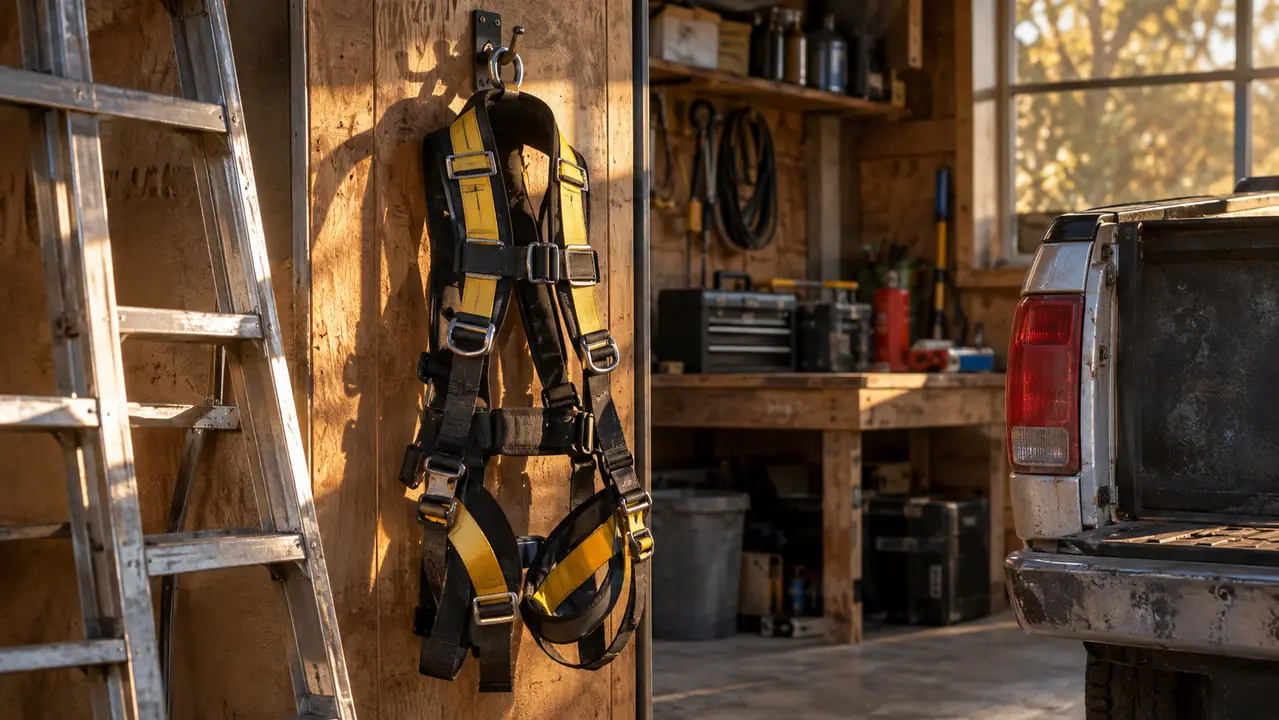
People ask why I waited so long to buy a real harness, and the honest answer is that I got comfortable. For 30 years I clipped in and out of a bucket truck without thinking about it, and somewhere along the way I started treating the treestand the same way. That was the mistake. The job had drilled the routine into me for three decades, and I'd left it at the bottom of the ladder. The day I nearly came off the top of the ladder stand, I wasn't being careless, I was being comfortable. There's a difference, and the Summit is what I use to make sure comfort never costs me again.
The other thing the job taught me is that ratings matter. The Summit is rated to 300 pounds, which covers me and my winter layers without a second thought. I checked that number before I bought it, the way I checked the rating on every lanyard I ever trusted. A safety rating isn't a suggestion, it's a contract. The Summit Treestands Pro honors that contract, and the one-year warranty tells me they're willing to stand behind it.
The Bottom Line
Here's the honest bottom line. The Summit Treestands Pro is the first full-body harness I've ever owned, and after a full season I can't imagine going back to the way I used to do it. It's comfortable enough to wear all sit, simple enough to put on in the dark, and it held me the one time I needed it to. That last part is the only part that really counts.
I've been hunting for 46 years, and I've learned that the gear that earns its spot in the truck is the gear you don't have to think about. The Summit is that. It doesn't ask for attention, it just does its job. It's on my back before I leave the tailgate, and it's the last thing I take off when I get home. If you climb a ladder stand, I'd rather you climb it in a full-body harness than a waist belt, and if you're going to buy one, this is the one I'd buy again.
What I Liked
- Torso strap and padded shoulder straps make long sits genuinely comfortable
- MOLLE attachment system carries a small pouch for calls and hand warmers
- Large fits a big man with room to spare, rated for 35- to 46-inch waists
- Rated to 300 pounds and covered by a one-year warranty
- Simple enough to put on at the tailgate in the dark
Where It Falls Short
- At 5.1 pounds, it's not the lightest thing you'll carry in
- Hand wash only with mild soap and air dry, no machine washing
- It only works if you actually wear it on every climb, no exceptions
Who This Is For
This harness is for anyone who climbs a ladder stand, plain and simple. It's for the hunter who, like me, has been getting away with a waist belt for years and knows better. It's for the bigger hunter who needs a Large and wants padding that doesn't quit at hour three. It's for the guy who wants one piece of gear he can put on in the dark, wear all sit, and trust on the way down. If that's you, the Summit is worth a hard look.
Who Should Skip It
If you hunt only from a ground blind or a box stand, you don't need this harness, and I'd tell you to save the money. If you're a pocket guy who will never use the MOLLE webbing, you're not losing much, but you're also not paying for much. And if you're not willing to put it on every single time, no harness on earth will help you. The Summit can't fix a habit you won't build. Buy it because you'll wear it, not because you hope to never need it.
A full season in the ladder stand, and I'd buy it again tomorrow.
The Summit Pro Safety Harness earned its spot in the truck. If you're still climbing with a waist belt, this is the upgrade worth making before the season starts. Check today's price on Amazon.
Amazon Check Today's Price on Amazon →